
story
When a Crow Feels Sick, It Visits an Anthill — Here’s Why

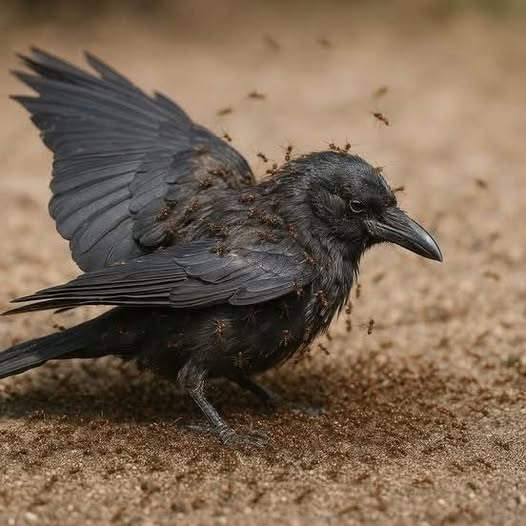
Nature has a way of surprising us with its intelligence — and the humble crow is one of the most fascinating examples. These birds are known for their problem-solving skills and adaptability, but few people know they also practice a form of natural healing.
When a crow begins to feel sick or weak, it doesn’t seek out medicine or shelter. Instead, it visits a place you’d never expect — an anthill.
A Strange but Smart Behavior
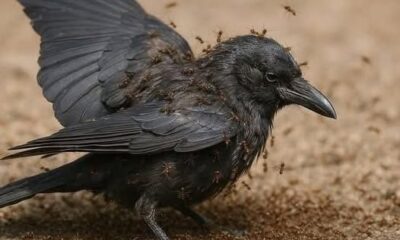
Imagine seeing a crow landing on the ground, spreading its wings wide, and lying perfectly still over an anthill. At first, it might look like something’s wrong — but what’s really happening is one of the most extraordinary natural rituals in the animal kingdom.
The crow remains motionless as dozens of ants crawl over its body and into its feathers. It’s not random behavior — it’s a deliberate act of self-care that scientists call “anting.”
The Science Behind “Anting”
So, why do crows let ants crawl all over them? The answer lies in chemistry.
Ants release a substance called formic acid, which acts as a natural disinfectant. When the ants come into contact with the crow’s feathers, this acid helps kill bacteria, fungi, and parasites that can cause illness. It’s like a built-in bird spa — one that nature designed perfectly.
This behavior helps crows clean their feathers, remove harmful microbes, and even soothe itchy skin caused by mites or other irritants.
Not Just Crows — Nature’s Shared Wisdom
Interestingly, crows aren’t the only birds that do this. Researchers have observed robins, jays, starlings, and even wild turkeys performing the same ritual. Some birds pick up ants in their beaks and rub them directly onto their feathers — a behavior known as “active anting.” Others, like crows, simply lie down and let the ants do the work — known as “passive anting.”
This shows how deeply instinctive and intelligent animals can be. Without laboratories or doctors, they’ve discovered effective ways to heal and protect themselves — all through natural instincts passed down through generations.
Nature’s Own Medicine Cabinet
The story of the crow reminds us that nature is its own pharmacy. Every living creature, from birds to insects, has evolved unique ways to stay healthy and balanced.
Humans often overlook these small wonders, focusing only on modern medicine — but there’s a lot we can learn from watching the natural world. The crow’s behavior teaches us that sometimes, the simplest solutions are the smartest ones.
A Lesson in Observation and Respect
Every time a crow visits an anthill, it demonstrates a quiet wisdom. It knows what its body needs, when to rest, and how to heal — all without external help.
It’s a powerful reminder for us too: when we slow down, observe, and trust nature’s rhythm, we realize how much healing power exists all around us.
From forests to oceans, from ants to birds — life constantly finds ways to survive, adapt, and thrive. All we have to do is pay attention.
Moral of the Story
The next time you see a crow sitting on the ground near an anthill, remember — it’s not strange behavior. It’s instinctive self-healing in action.
Nature’s intelligence doesn’t shout; it whispers through the behavior of creatures like the crow. And in that quiet wisdom, we find one of life’s greatest lessons — healing doesn’t always require complexity. Sometimes, it just takes trust in nature’s balance.
The world around us is full of natural miracles, often hidden in plain sight. “Anting” is more than just a bird behavior — it’s a beautiful reflection of how deeply connected and intelligent life on Earth truly is.
The crow’s instinct to heal itself shows us that every creature, no matter how small or common, carries within it a spark of nature’s brilliance.
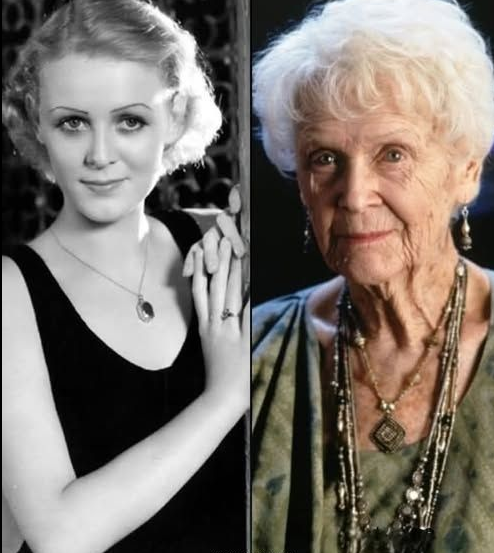
Not many people realize that the actress who portrayed the elderly Rose in Titanic (1997) was already 86 years old when she stepped into one of the most memorable roles in film history.
Her name was Gloria Stuart — and with that performance, she etched her name into cinematic legend.
Her moving portrayal of Rose Dawson Calvert earned her an Academy Award nomination for Best Supporting Actress, making her one of the oldest nominees ever honored by the Oscars. It was a powerful reminder that talent has no expiration date.
Born on July 4, 1910, in Santa Monica, California, Gloria began her Hollywood journey in the early 1930s. She quickly rose to prominence as one of the first actresses signed by Universal Pictures, starring in classic films such as The Old Dark House (1932) and The Invisible Man (1933). Her presence became a defining part of early Hollywood cinema.
In 1946, she chose to step away from acting, dedicating herself to visual arts — painting, sculpture, and fine printmaking. She even opened her own studio, where her artwork was exhibited in galleries, proving her creativity extended far beyond the screen.
Though she made occasional appearances in film and television during the 1970s, it wasn’t until 1997 that she made her remarkable return in Titanic. As the older Rose, she gave the film its emotional anchor — embodying memory, love, heartbreak, and resilience with extraordinary grace.
At 87 years old, she walked the Academy Awards red carpet to standing admiration. While she didn’t take home the Oscar, she had already won something far greater — a permanent place in cinema history and in the hearts of audiences around the world.
Gloria Stuart passed away in 2010 at the age of 100, leaving behind a legacy defined by artistry, courage, and timeless talent. Her life stands as proof that it is never too late to shine — and that true storytellers never stop sharing their light, no matter how many years pass.
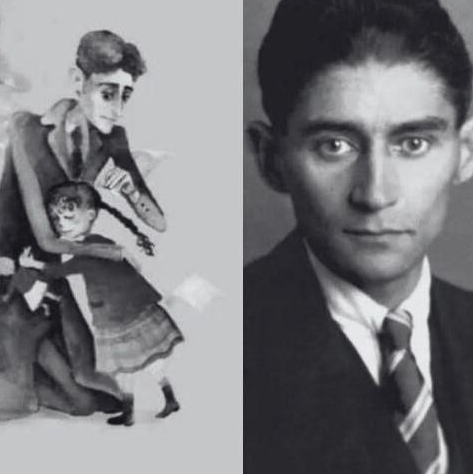
unmarried, childless, and living quietly in Berlin — he stumbled upon a little girl in a park, sobbing as if her heart had shattered. Her beloved doll was gone.
Kafka knelt beside her and searched the park, but the doll had vanished without a trace. Seeing the depth of her sorrow, he made her a promise.
“Meet me here tomorrow,” he said gently. “We’ll look again.”
The next day, the doll was still missing.
But Kafka arrived with something unexpected — a letter.
It was written “from the doll.”
“Please don’t cry,” it began. “I’ve gone traveling to see the world. I’ll write to you about my adventures.”
And so the letters continued.
Day after day, week after week, Kafka met the girl in the park and read aloud new messages from the doll — tales of distant cities, exciting discoveries, and friendships formed along the way. The doll was no longer lost; she was exploring.
The little girl listened with wide, shining eyes. Her grief slowly softened into curiosity. Her heartbreak transformed into wonder.
Eventually, Kafka told her the doll was coming home.
He presented her with a new doll he had carefully chosen.
The girl studied it and said softly, “She doesn’t look like my doll.”
Kafka smiled and handed her one final letter.
“My travels have changed me.”
The girl hugged the new doll tightly. The story had done its quiet work — stitching together what loss had torn apart.
Not long after, Kafka passed away. The shared secret of the doll remained between them.
Years later, the girl — now grown — discovered a small note hidden inside the doll. In Kafka’s handwriting, it read:
“Everything you love will probably be lost. But in the end, love returns in another form.”
That is the heart of the story.
Change is unavoidable.
Loss is part of being human.
But love — somehow — always finds its way back.
Healing isn’t something we face alone.
When we choose imagination, compassion, and connection over despair, we transform grief into grace — and heartbreak into hope.
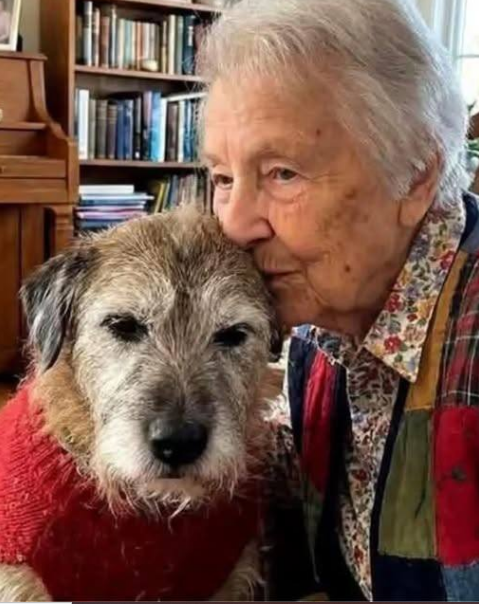
At 90 years old, I made a decision many people said I shouldn’t make.
I adopted a 14-year-old dog named Benson.
By the time Benson arrived at the shelter, his world had already grown painfully small. His previous family brought him in and asked for him to be euthanized—not because he was aggressive, not because he was sick, but simply because he was “too old” and they no longer wanted the responsibility.
The shelter refused.
They saw what his family no longer did: a gentle soul, a quiet heart, and a dog who still had love to give.
When I heard Benson’s story, something deep inside me stirred. At my age, people often tell you what you should and shouldn’t do. They say you should slow down, avoid attachments, and prepare for endings.
But when I thought about Benson, I didn’t think about my age.
I thought about what it feels like to be considered finished while your heart is still very much alive.
So I asked to meet him.
The moment I walked into the shelter, Benson slowly stood up, walked straight toward me, and gently rested his head against my chest. There was no hesitation. No fear. Just trust—like he already knew me, like he had been waiting.
A senior dog and a senior woman. Two souls both overlooked in different ways. Without a single word, we understood each other.
Now Benson follows me softly from room to room, always matching my pace. He naps beside me during quiet afternoons, his gentle breathing filling a house that once felt too silent. I put little sweaters on him to keep him warm, and he wears them proudly—as if they are proof that someone still cares.
People tell me I rescued him.
But the truth is, Benson rescued me.
He rescued me from empty rooms, from long evenings without conversation, and from the quiet loneliness that can settle in when the world starts moving on without you.
Together, we are not racing against time. We are not afraid of it.
We are simply sharing it—slowly, gently, with love.
We are giving each other a final chapter that is warm, calm, and full of meaning.
And that is more than enough.

Gloria Stuart The 86-Year-Old Star Who Made Titanic Unforgettable

When Franz Kafka was 40

A Dream Warned Mark Ruffalo He Had a Brain Tumor — And It Saved His Life

I Was 90 Years Old When I Adopted a 14-Year-Old Dog

Keanu Reeves: Quiet Kindness in a Loud World
Gloria Stuart The 86-Year-Old Star Who Made Titanic Unforgettable
Not many people realize that the actress who portrayed the elderly Rose in Titanic (1997) was already 86 years old...
When Franz Kafka was 40
unmarried, childless, and living quietly in Berlin — he stumbled upon a little girl in a park, sobbing as if...

A Dream Warned Mark Ruffalo He Had a Brain Tumor — And It Saved His Life
In May 2001, Mark Ruffalo was on the verge of everything he had worked for. His breakout performance in You...
I Was 90 Years Old When I Adopted a 14-Year-Old Dog
At 90 years old, I made a decision many people said I shouldn’t make.I adopted a 14-year-old dog named Benson....

Keanu Reeves: Quiet Kindness in a Loud World
In an industry often defined by excess and self-promotion, Keanu Reeves stands out for a very different reason: his generosity...


Gloria Steinem: The Woman Who Went Undercover to Expose the Truth Behind the Playboy Fantasy
Before she became the face of modern feminism, Gloria Steinem was an ambitious young journalist trying to be taken seriously...


The Miracle of Jindo: When the Sea Opens in South Korea
Twice a year, a breathtaking natural event takes place in South Korea — something so extraordinary that it’s known as...


Natalia the Chimpanzee: A Heartbreaking Lesson in Love and Grief
At Bioparc Valencia, an emotional story unfolded that touched hearts around the world. A chimpanzee named Natalia lost her baby...

When a Crow Feels Sick, It Visits an Anthill — Here’s Why
Nature has a way of surprising us with its intelligence — and the humble crow is one of the most...

Binti Jua: The Gentle Gorilla Who Saved a Child
In 1996, an unforgettable act of compassion took place at Chicago’s Brookfield Zoo. A 3-year-old boy accidentally fell into the...

 Things To Do2 years ago
Angel Fire or Red River: Which New Mexico Mountain Town is Right for You?
- Beaches2 years ago
Does Allegiant Air offer flights to Daytona Beach?
- Beaches2 years ago
Is Driving Allowed on Panama City Beach?
- Things To Do2 years ago
Claridge’s vs The Savoy: Which Hotel Reigns Supreme?
- Travel FAQs2 years ago
What are the dimensions of an average hotel room?
- Things To Do2 years ago
How Far is the Distance Between Fort Lauderdale and Miami’s South Beach?
- Things To Do2 years ago
Why is Hanakapiai Beach considered one of the most dangerous beaches in Hawaii?
- Travel FAQs2 years ago
What is the best way to get from Venice train station to a nearby hotel?