
story
Gary Burg hoff Walked Away from MASH at the Height of His Fame—Here’s Why

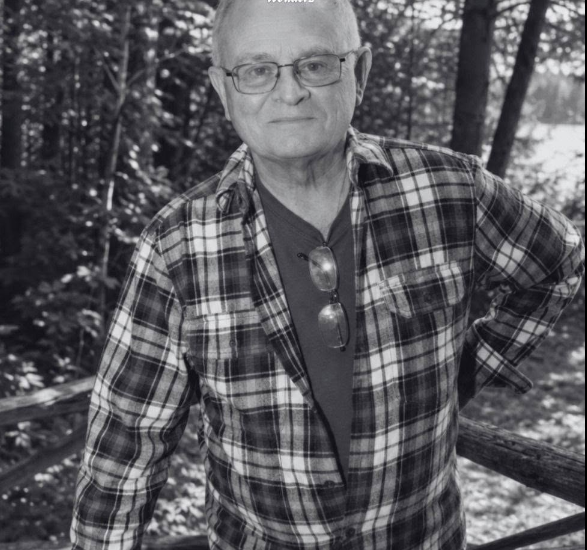
In October 1979, Gary Burghoff walked onto the MAS*H set for the last time as a regular cast member — and told the producers he was done.
Not for more money. Not over a creative dispute. Not because of any conflict with the cast.
He left because staying was slowly erasing who he actually was.
Most actors would never walk away from what Burghoff was giving up. MAS*H was the number one show on television. Tens of millions of viewers tuned in every week. His character — Corporal Walter “Radar” O’Reilly, the sweet-natured farm boy from Iowa who could hear the helicopters before anyone else — was one of the most beloved figures in American television. He’d already won an Emmy. He had four more years of guaranteed work ahead of him, since the show wouldn’t end until 1983.
Warner Bros. offered him four million dollars to stay. One of the highest paydays in television at the time. Fewer episodes. Creative control. Anything he wanted.
He said no to all of it.
To understand why, you have to know who Gary Burghoff actually was underneath the character. He was born in Bristol, Connecticut, in 1943, with a condition called brachydactyly that left three fingers on his left hand significantly smaller than normal. Growing up in the 1950s with a visible physical difference wasn’t easy. He learned to hide his hand in photographs, to deflect attention with talent. He became an accomplished jazz drummer. A skilled wildlife painter. He found the places where his difference simply didn’t matter.
When he auditioned for Robert Altman’s 1970 film MAS*H, he brought something nobody expected: genuine vulnerability. He didn’t play Radar as a joke. He played him as a scared kid trying to survive something terrible by making himself indispensable. Altman cast him immediately.
When CBS adapted the film for television in 1972, most of the original cast moved on. Burghoff stayed — the only actor from the film to cross over to the series — because he believed there was more to explore in the character. And for seven years, he delivered one of television’s most quietly remarkable performances, earning an Emmy in 1977 for Outstanding Supporting Actor.
But something was happening underneath the recognition.
Burghoff was intensely private, introspective, and serious — almost the opposite of Radar’s wide-eyed innocence. Playing someone so different from himself, eight months a year for seven straight years, started to feel like psychological erasure. He later described it as living in someone else’s skin until you forget what your own feels like. His marriage was falling apart. He rarely saw his daughter. Everywhere he went, strangers called him “Radar” and expected the character — not the complicated human being standing in front of them.
His farewell episode, “Good-Bye Radar,” aired in two parts in October 1979. Director Charles Dubin later revealed that Burghoff broke down completely during filming and had to be walked around the backlot for fifteen minutes before he could continue. The character’s story and the actor’s personal pain had collided in a way nobody could have predicted.
His co-star Mike Farrell tried to convince him to stay, even warning him about the career difficulties that often followed leaving a hit show. Years later, Farrell said simply: “Gary Burghoff may well have been the best actor in the company.”
Burghoff left anyway.
What followed was, by Hollywood’s metrics, a disappointment. Casting directors couldn’t see past Radar. His career slowed dramatically. A spinoff series aired only once. While other MAS*H cast members went on to busy post-series careers, Burghoff largely stepped away from the industry.
But he didn’t disappear — he chose a different life entirely. He moved to Connecticut. He remarried. He became a serious wildlife painter. He performed with orchestras as a drummer. He invented fishing tackle and holds multiple patents. He spent time with his children.
When MAS*H ended in 1983 with the most-watched series finale in television history — 106 million viewers — Burghoff made a brief appearance as a gesture to the fans who’d written him thousands of letters. Then he stepped back again, and mostly stayed back.
Today, at 83 years old, he lives quietly, far from Hollywood. When asked in rare interviews whether he regrets leaving, his answer has never changed:
“Family, to me, became the most important thing.”
Radar O’Reilly survived the Korean War by holding onto his essential self. Gary Burghoff survived fame the same way — by refusing to trade who he was for what everyone else wanted him to be.
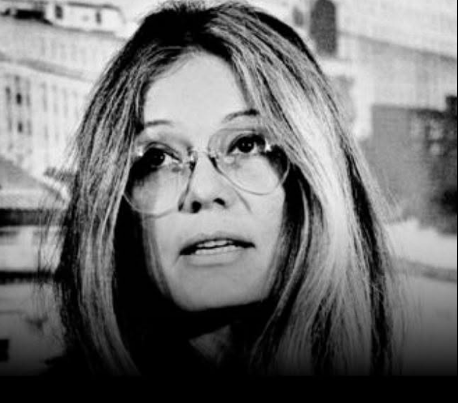
Gloria Steinem died at her home in New York City on September 2, 2026. She was 92.
For more than six decades, Steinem worked as a journalist, author, organizer and advocate for equality. Yet perhaps the clearest measure of her influence is that many of the changes she championed no longer seem extraordinary.
They have become part of ordinary life.
Today, millions of women establish credit, obtain mortgages, build careers and make decisions about their own lives without seeking a man’s approval. Workplace conduct once dismissed or endured in silence now has a name: sexual harassment. The title “Ms.” appears routinely on forms, correspondence and official documents without identifying a woman by her marital status.
These changes were not the work of one person. They emerged from a broad movement involving generations of activists, lawyers, writers, legislators and ordinary citizens. But Steinem became one of that movement’s most recognizable voices—and one of its most persistent organizers.
The Magazine Many Believed Would Fail
One of Steinem’s most influential projects began in the early 1970s.
Working with a group of pioneering editors and writers, she helped establish Ms. magazine. A preview edition appeared as an insert in New York magazine in late 1971 before the publication launched independently in 1972.
Critics questioned whether a national feminist magazine could attract enough readers to survive. The response quickly answered them.
According to Ms., all 300,000 test copies sold out within eight days. The publication also received approximately 26,000 subscription requests and more than 20,000 letters from readers within weeks.
The magazine had found an audience because it addressed subjects that many mainstream publications treated as private, uncomfortable or unimportant. Its pages examined employment discrimination, reproductive freedom, domestic violence, childcare, politics and the unequal expectations placed upon women.
It gave readers language for experiences they had often been encouraged to endure silently.
Fifty-Three Women Broke the Silence
Among the magazine’s most courageous early features was a petition titled “We Have Had Abortions.”
Published when abortion remained illegal in much of the United States, the statement carried the names of 53 prominent women who publicly acknowledged having undergone the procedure. Steinem added her own name to the list.
The decision carried genuine personal and professional risk. These women were not responding anonymously to a survey. They were attaching their identities and reputations to one of the country’s most controversial issues.
Their declaration appeared before the Supreme Court issued its 1973 decision in Roe v. Wade. It challenged the shame and secrecy surrounding abortion by showing that the issue affected recognizable, accomplished women as well as countless others whose stories remained private.
The constitutional protection established by Roe was overturned in 2022, and abortion access now differs widely across the United States. That reversal demonstrates that rights secured through courts and legislation can be weakened or removed.
It also explains why Steinem continued speaking about equality well into her later years. She understood that social progress could never be treated as permanent.
Part of a Much Larger Movement
Although Steinem became internationally famous, she repeatedly emphasized that feminism was a collective effort.
She worked alongside activists such as Dorothy Pitman Hughes, a Black community organizer with whom she traveled and delivered lectures across the country. Together, they presented racial and gender equality as connected struggles rather than competing causes.
Steinem also learned from and collaborated with attorney and activist Florynce Kennedy, whose work connected feminism with the broader civil-rights movement.
In 1971, Steinem joined Shirley Chisholm, Bella Abzug, Betty Friedan, Myrlie Evers-Williams and hundreds of other women in establishing the National Women’s Political Caucus. The organization sought to increase women’s participation and influence in government.
Chisholm—the first Black woman elected to Congress—later became the first Black candidate to seek a major party’s presidential nomination. Steinem supported her campaign, although the political choices surrounding that historic race were sometimes complicated and contested within the movement itself.
These partnerships are an important part of Steinem’s legacy. The movement she represented was never created by a single leader, publication or organization. It grew through coalitions that were not always perfect but nevertheless expanded the national conversation about power and equality.
When Financial Independence Was Not Guaranteed
In the early 1970s, women routinely encountered discrimination when applying for credit. Some lenders discounted a married woman’s income, demanded information about pregnancy or required a husband’s involvement in an application.
The precise practices differed among banks and states, so it would be inaccurate to say that every American woman was legally prohibited from opening an account or obtaining credit independently. The discrimination, however, was widespread and deeply embedded in the financial system.
In 1974, Congress passed the Equal Credit Opportunity Act. The law prohibited creditors from discriminating against applicants because of sex or marital status, among other protected characteristics.
The legislation was achieved through the efforts of many lawmakers and advocates. Steinem did not single-handedly create it, but it reflected the larger demand for economic independence advanced by the women’s movement she helped bring into public view.
Although it may sound like a technical banking regulation, the law affected nearly every part of adult life. Access to credit could determine whether a woman was able to purchase a home, finance a vehicle, establish a business or leave an unsafe relationship.
Financial independence was not separate from personal freedom. It was one of its foundations.
Why Two Letters Mattered
The title of Ms. magazine was itself part of its message.
For generations, “Miss” and “Mrs.” had immediately identified a woman according to whether she was married. Men commonly used “Mr.” regardless of marital status, while women were expected to announce that part of their private lives whenever they completed a form or introduced themselves formally.
“Ms.” provided an alternative.
The magazine did not invent the term, but its prominence helped bring it into widespread use. Those two letters expressed a larger principle: a woman’s public identity did not need to be defined by her relationship to a man.
It was a small linguistic change with far-reaching cultural meaning.
Giving Workplace Abuse a Name
Language also transformed how people understood mistreatment in the workplace.
The phrase “sexual harassment” entered wider legal and public use during the 1970s through the work of feminist activists, scholars, attorneys and workers who recognized that certain forms of intimidation and coercion were not isolated personal incidents.
Once the behavior had a widely understood name, it became easier to document, discuss and challenge. Courts eventually recognized some forms of workplace sexual harassment as discrimination prohibited under federal civil-rights law.
Steinem helped publicize the broader struggle against workplace inequality, but this achievement—like so many others—belonged to a movement rather than to one individual.
That distinction does not diminish her contribution. It places it in its proper context.
Her influence came partly from her ability to connect people, ideas and campaigns, then bring them before audiences that might otherwise have ignored them.
A Legacy Larger Than One Person
Steinem’s life included journalism, political organizing, books, speeches and the creation of institutions intended to outlast their founders. In 2013, President Barack Obama awarded her the Presidential Medal of Freedom.
She remained active into her later years, continuing to advocate for women’s rights, racial justice, LGBTQ+ equality and peaceful cooperation across national boundaries.
Her work also attracted disagreement and criticism, including from people within the feminist movement. No figure involved in decades of political struggle leaves behind an uncomplicated record. Steinem herself resisted being treated as the sole leader of a movement composed of millions of people.
Her importance lies not in the idea that she changed America alone, but in how effectively she helped make private experiences public and individual frustrations political.
She understood that lasting change required more than passing a law. It also required changing institutions, language and expectations.
The Freedom Not to Ask Permission
When Gloria Steinem entered public life, many assumptions about women were so deeply rooted that they appeared natural.
Women were expected to accept fewer opportunities, less authority and less control over their financial and personal lives. Problems inside homes and workplaces were often dismissed as private matters rather than consequences of unequal power.
Steinem spent decades challenging those assumptions.
Some battles remain unresolved, and some earlier victories have been reversed or placed under renewed pressure. Nevertheless, much of what she fought to bring into the world has become so familiar that younger generations may not realize it once had to be demanded.
That may be one of the most meaningful measures of social change.
Some inheritances arrive as money, property or treasured possessions. Others are woven quietly into everyday life—the ability to sign your own application, use your own name, describe an injustice and expect your voice to matter.
Gloria Steinem’s enduring inheritance is found in all the moments when a woman no longer has to ask permission.
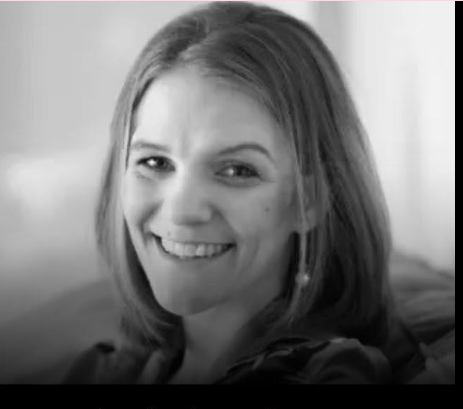
A small pair of flight attendant wings once traveled far beyond the uniform for which it had been made.
The metal pin crossed the United States, reached a battlefield in Afghanistan and accompanied an American serviceman on 20 combat missions. Yet its extraordinary journey began with a young woman from Batesville, Arkansas, whose life was just beginning to take shape.
Her name was Sara Elizabeth Low.
A Young Woman Who Chose the Sky
Sara graduated from Batesville High School in 1991 before attending the University of Arkansas, where she earned a degree in finance and real estate.
Her education could have led to a conventional office career, but Sara wanted something different. She wanted to fly.
In 1999, she became a flight attendant with American Airlines. She was initially based in New York and later transferred to Boston. By the fall of 2000, she had moved into an apartment in Boston’s Beacon Hill neighborhood.
After spending years sharing homes with roommates, Sara finally had a place of her own. At 28, she appeared to be entering an exciting new chapter of her life.
Everything changed on September 11, 2001.
Aboard American Airlines Flight 11
That morning, Sara was working aboard American Airlines Flight 11, scheduled to travel from Boston to Los Angeles.
After hijackers seized control of the aircraft, flight attendant Betty Ong contacted American Airlines and reported that the cockpit was no longer responding and that people aboard the plane had been injured.
Another flight attendant, Amy Sweeney, also needed to reach the airline’s offices on the ground. According to an account preserved by the National September 11 Memorial & Museum, Sara helped make that second call possible.
She remembered her family’s calling-card number—a sequence of digits she had reportedly known since her college years. Sweeney used the number to contact the American Airlines Flight Services office in Boston.
For several crucial minutes, she calmly provided information about what was happening aboard the aircraft, including details about the hijackers and where they had been seated.
The two calls gave officials on the ground vital early information about the unfolding emergency.
At 8:46 that morning, Flight 11 struck the North Tower of the World Trade Center. Sara and everyone else aboard the aircraft lost their lives.
Her story, however, did not end there.
A Friend’s Gift to a Grieving Father
Four days later, family members and friends gathered in Batesville for Sara’s memorial service.
Among those attending was Karyn Ramsey, Sara’s roommate and a newly hired American Airlines flight attendant.
During the service, Karyn removed the flight attendant wings from her own uniform. She then pinned them onto the clothing of Sara’s father, Mike Low.
It was a simple gesture, but it carried enormous meaning.
The wings represented the career Sara had chosen, the life she had been building and the future that had been taken from her. Mike continued wearing the pin for weeks after the service.
As he grieved, he began wondering whether the wings could travel somewhere meaningful in his daughter’s memory.
Eventually, he contacted someone at the Pentagon with an unusual request: Could the wings be carried by an American servicemember participating in Operation Enduring Freedom in Afghanistan?
The answer was yes.
Carried by the Night Stalkers
The wings were entrusted to Staff Sergeant Mark Baker of the 160th Special Operations Aviation Regiment.
Known as the “Night Stalkers,” the regiment specializes in demanding aviation missions, often conducted at night and under exceptionally difficult conditions.
Baker attached Sara’s wings to his equipment and carried them on 20 combat missions in Afghanistan.
The small pin had once represented the everyday responsibilities of a commercial flight attendant. It now flew aboard military aircraft on the other side of the world.
For Baker and his fellow servicemembers, the wings served as a quiet reminder of the lives lost on September 11 and the reason they had been sent overseas.
Sara had never met the men carrying her wings. They carried her memory anyway.
The Wings Come Home
On May 21, 2002, members of the Night Stalkers held a ceremony at Fort Campbell, Kentucky.
There, they returned the wings to Mike Low.
The pin had been changed during its journey. It was now engraved with Sara’s name and the words “Afghan War,” preserving a record of where it had traveled and what it had represented.
Mike then returned the wings to Karyn—the friend whose compassionate gesture at Sara’s memorial service had begun their remarkable journey.
Years later, Karyn donated the wings to the National September 11 Memorial & Museum, ensuring that their story would be preserved for future generations.
The Power of Ordinary Objects
The most moving parts of Sara’s story involve objects that initially seemed completely ordinary.
One was a calling-card number.
It was not emergency equipment or part of an official safety system. It was simply a number Sara had committed to memory years earlier. Yet during an unimaginable crisis, it helped Amy Sweeney establish a vital connection with people on the ground.
The other was a small metal pin.
It was not a weapon, a navigational instrument or a piece of survival equipment. It was an ordinary part of an airline uniform. But after Sara’s death, it became a symbol of friendship, grief, service and remembrance.
Its importance came not from the material from which it was made, but from the people who chose to carry it.
Betty Ong and Amy Sweeney continued communicating information during an emergency. Karyn Ramsey gave her wings to a grieving father. Mike Low found a way for the pin to carry his daughter’s memory overseas. Mark Baker took responsibility for that memory and carried it through 20 missions.
Each person added another chapter to the story.
A Memorial Small Enough to Hold
Nearly 3,000 people were killed in the September 11 attacks. Their names are now preserved at memorials, in museums and within the memories of families around the world.
Sara Low’s story reminds us that remembrance does not exist only in enormous monuments.
Sometimes it can be carried in the palm of a hand.
Her wings traveled from an airline uniform to a memorial service, from Arkansas to Afghanistan, and eventually into a museum. Along the way, they connected a young flight attendant, a grieving father, a loyal friend and a military aviation unit whose members refused to let her name disappear into history.
Sara’s life cannot be measured only by the tragedy of its final morning. She was a daughter, a friend and a young professional creating an independent life for herself. In a moment of crisis, even something she had memorized years earlier helped another crew member reach the ground.
The wings now preserved in her memory tell an equally powerful story.
Some monuments are built from stone and steel.
Others are pinned to a uniform, carried across mountains and passed carefully from one person to another—because people understand that remembering a name is one way of continuing to carry the life behind it.
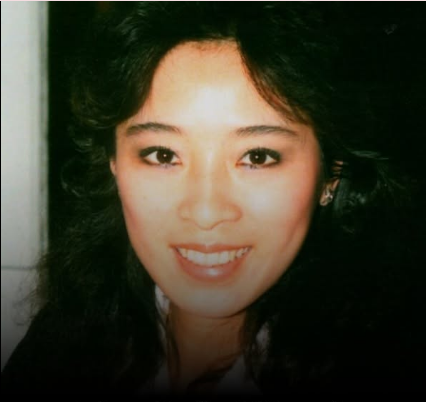
At 8:19 on the morning of September 11, 2001, a telephone call reached an American Airlines reservations center in North Carolina.
The woman calling identified herself in a calm, professional voice.
“My name is Betty Ong. I’m number three on Flight 11.”
She then reported that the cockpit was not responding, crew members had been stabbed and people near the front of the aircraft were struggling to breathe.
“I don’t know,” she said. “I think we’re getting hijacked.”
It was one of the first warnings from inside the terrorist attacks that were beginning to unfold.
A Flight Attendant With a Vacation Planned
Betty Ann Ong was 45 years old and had worked as an American Airlines flight attendant for approximately 14 years.
Born in San Francisco, she was one of four children in a Chinese American family. Relatives remembered her as dependable, generous and attentive to the needs of others—qualities that also shaped the way she approached her work.
Betty had reportedly requested the Flight 11 assignment so she could return to Los Angeles and begin a vacation. She was planning to travel to Hawaii with her sister, Cathie.
It should have been the final workday before time away with someone she loved.
Instead, it became the day her calm voice alerted people on the ground that an American passenger plane had been hijacked.
What Happened Aboard Flight 11
American Airlines Flight 11 departed Boston Logan International Airport at 7:59 a.m. and was scheduled to fly to Los Angeles.
The Boeing 767 carried 81 passengers—including five hijackers—two pilots and nine flight attendants. There were 92 people aboard in total.
At approximately 8:14 a.m., the pilots stopped responding to air traffic control. Investigators believe the hijacking began at about that time.
Flight attendants Karen Martin and Barbara “Bobbi” Arestegui were stabbed. Passenger Daniel Lewin was also fatally wounded during the takeover. Captain John Ogonowski and First Officer Thomas McGuinness Jr. could no longer be contacted.
The hijackers seized the cockpit and turned the aircraft south.
Betty was working in the coach cabin. Unable to reach the pilots, she used an Airfone from the rear of the plane to contact American Airlines.
No training manual could have fully prepared her for what was happening. Nevertheless, she began reporting what she could see and what other crew members had learned.
“The Cockpit’s Not Answering”
Betty initially reached reservations agents at American Airlines’ center near Raleigh, North Carolina. Operations specialist Nydia Gonzalez soon joined the call and began passing Betty’s information to the airline’s System Operations Control center in Texas.
Betty explained that the crew could not open the cockpit door or communicate with the pilots.
She reported that two flight attendants had been attacked. One appeared to be seriously injured, while the other was breathing despite her wounds.
Betty also described a passenger who had been stabbed in business class. She believed someone had sprayed Mace or another chemical irritant because crew members were having difficulty breathing near the front of the aircraft.
Her voice remained remarkably controlled.
She did not speculate beyond what she could reasonably observe. She answered questions, clarified her position on the aircraft and relayed information from other members of the crew.
At one point, an American Airlines employee reassured her that she was doing a good job and asked her to remain calm.
She did.
The Importance of the Seat Numbers
One of the most valuable pieces of information supplied from Flight 11 concerned the seat locations associated with the suspected hijackers.
Betty and fellow flight attendant Madeline “Amy” Sweeney, who was communicating with a different American Airlines office, reported seat numbers linked to men who had gained access to the cockpit area.
Airline employees compared those locations with the passenger manifest and began identifying possible suspects.
This happened before authorities understood the full scale of the plot.
The first aircraft had not yet struck the World Trade Center. Officials did not know that four planes had been hijacked or that attacks were also developing aboard United Airlines Flight 175, American Airlines Flight 77 and United Airlines Flight 93.
Information was arriving in disconnected pieces from flight crews, airline offices and air traffic controllers.
Betty’s report helped turn some of those fragments into a clearer picture. It confirmed that people had been attacked, the cockpit was inaccessible and the aircraft was under the control of hijackers.
The seat information she and Amy provided also gave investigators an early path toward identifying the attackers.
Nearly 25 Minutes on the Line
Betty remained connected for approximately 25 minutes, from about 8:19 until 8:44 a.m.
Part of her call was recorded, preserving her voice and the information being passed between American Airlines employees. The recording was later played publicly during a hearing of the National Commission on Terrorist Attacks Upon the United States, commonly known as the 9/11 Commission.
Throughout the emergency, Betty continued trying to help.
Her communication was not dramatic. That is part of what makes it so powerful.
She identified herself. She described injuries. She explained that the cockpit door would not open. She answered questions as clearly as conditions allowed.
She gave the people on the ground information they could use.
At approximately 8:44 a.m., the connection with Betty was lost. Two minutes later, at 8:46:40, Flight 11 struck the North Tower of the World Trade Center.
All 87 innocent passengers and crew members aboard were killed, along with an unknown number of people inside the tower at the moment of impact.
More Than a Voice on a Recording
It is easy to remember Betty only as the voice from Flight 11. Her family, however, remembers an entire life.
She was a daughter, sister, aunt and friend. She enjoyed working with children and senior citizens and frequently went out of her way to assist passengers who needed additional care.
Her family later established the Betty Ann Ong Foundation, an organization created to continue her commitment to children and community service.
Public memorials also preserve her name.
A recreation center in San Francisco’s Chinatown was renamed the Betty Ann Ong Recreation Center in her honor. At the National September 11 Memorial in New York, her name appears on the North Pool alongside those of the other passengers and crew members of Flight 11.
For her loved ones, however, recognition cannot replace the sister and daughter who was expected to return from work and leave for a Hawaiian vacation.
The Human Scale of Courage
September 11, 2026, marked the 25th anniversary of the attacks.
A quarter-century later, the events are often remembered through enormous images and numbers: four hijacked aircraft, two collapsing towers and nearly 3,000 people killed.
Betty Ong’s telephone call reveals the tragedy on a more personal scale.
She was a flight attendant in the rear of an aircraft whose pilots could no longer answer. Colleagues had been injured, the air near the front of the cabin was difficult to breathe and no one aboard could know what would happen next.
Betty could not regain control of the plane. She could not open the cockpit door.
But she found something useful she could still do.
She picked up a telephone and told the outside world what was happening.
Her report became an essential firsthand account of the hijacking. It helped airline officials understand the emergency and gave investigators information they later used to reconstruct the attack.
Courage is sometimes described as the absence of fear. Betty Ong’s story suggests something more meaningful.
Courage can be the ability to remain focused while fear is present—to observe carefully, speak clearly and continue helping when the outcome is uncertain.
On one of the darkest mornings in American history, that is exactly what Betty Ong did.

Gloria Steinem Dies at 92, Leaving a Legacy Woven Into Everyday Life

The Flight Attendant’s Wings That Flew 20 Missions in Afghanistan

Betty Ong’s Call From Flight 11 Gave the First Warning of 9/11

The Calm Voice From Flight 11: Remembering Madeline Amy Sweeney

The American Diplomat Who Risked His Career to Save Thousands From the Nazis
The American Diplomat Who Risked His Career to Save Thousands From the Nazis
Betty Ong’s Call From Flight 11 Gave the First Warning of 9/11
The Calm Voice From Flight 11: Remembering Madeline Amy Sweeney
The Flight Attendant’s Wings That Flew 20 Missions in Afghanistan
Gloria Steinem Dies at 92, Leaving a Legacy Woven Into Everyday Life
Gloria Steinem Dies at 92, Leaving a Legacy Woven Into Everyday Life
Gloria Steinem died at her home in New York City on September 2, 2026. She was 92. For more than...
The Flight Attendant’s Wings That Flew 20 Missions in Afghanistan
A small pair of flight attendant wings once traveled far beyond the uniform for which it had been made. The...
Betty Ong’s Call From Flight 11 Gave the First Warning of 9/11
At 8:19 on the morning of September 11, 2001, a telephone call reached an American Airlines reservations center in North...
The Calm Voice From Flight 11: Remembering Madeline Amy Sweeney
Madeline Amy Sweeney had not originally been scheduled to work aboard American Airlines Flight 11 on September 11, 2001. Known...
The American Diplomat Who Risked His Career to Save Thousands From the Nazis
Years after Hiram Bingham IV died, one of his sons was cleaning the family’s old farmhouse in Salem, Connecticut, when...

Gary Burghoff was floating in his swimming pool when an airplane passed overhead. For a moment, he froze. He tilted...

At just twenty-four years old, Wang Xiao received devastating news. Doctors told her she was living with uremia, a life-threatening...

The Grandparents Who Raised Barack Obama: The Untold Story Behind a Future President
A candid beach photograph captures a young boy laughing with his arms wrapped tightly around his grandfather’s head as waves...

Vivian Liberto: The Untold Story of Johnny Cash’s First Wife and the Love That Began With Letters
Long before Johnny Cash became one of country music’s greatest legends, he was a 19-year-old Air Force recruit who met...

Ruth Coker Burks: The Woman Who Cared for Hundreds of AIDS Patients When Few Others Would
In the early years of the AIDS epidemic, fear and misinformation often left patients isolated from their families, communities, and...

 Things To Do2 years ago
Angel Fire or Red River: Which New Mexico Mountain Town is Right for You?
- Beaches2 years ago
Is Driving Allowed on Panama City Beach?
- Beaches2 years ago
Does Allegiant Air offer flights to Daytona Beach?
- Things To Do3 years ago
Claridge’s vs The Savoy: Which Hotel Reigns Supreme?
- Things To Do2 years ago
Is it Permitted to Bring Food into Costa Rica?
- Things To Do2 years ago
What can I expect from the weather in Taos, NM in March?
- Things To Do2 years ago
What are the best activities for a fun Monday night in NYC?
- RV CAMPING2 years ago
When a woman wakes up, a random dog is in her bed