
story
Keanu Reeves’ Heritage: How His Mother Preserved His Hawaiian and Chinese Roots

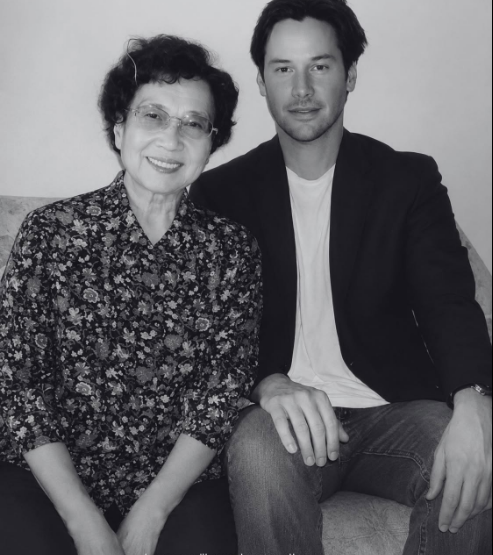
Keanu Reeves’ Heritage: The Quiet Family Legacy That Shaped His Life
To millions of fans around the world, Keanu Reeves is admired not only for his successful acting career but also for his humility, kindness, and down-to-earth personality.
Stories of his generosity and respectful treatment of others have become almost as well known as his performances on screen.
While many people wonder what shaped those qualities, part of the answer may lie in his family history—a story of cultural preservation, resilience, and the lasting influence of the women who raised him.
A Family with Diverse Cultural Roots
Keanu Reeves was born in 1964 in Beirut, Lebanon, to Samuel Nowlin Reeves Jr. and Patricia Taylor.
His father, Samuel Reeves Jr., was born in Hawaii and came from a richly diverse background that included Native Hawaiian, Chinese, English, Irish, and Portuguese ancestry.
This multicultural heritage reflected Hawaii’s long history as a meeting place of many cultures.
However, Keanu’s relationship with his father changed dramatically during early childhood.
His Father’s Early Departure
When Keanu was about three years old, his father left the family.
The separation meant Keanu grew up with very little contact with his father’s side of the family.
For many children, losing contact with a parent can also mean losing connection to an entire branch of their cultural identity.
In Keanu’s case, that almost happened.
Fortunately, another influence helped preserve that important part of his heritage.
A Mother Who Kept Culture Alive
Although Patricia Taylor was raising her children largely on her own, she made an effort to preserve elements of Keanu’s paternal heritage.
After the family eventually settled in Toronto, their home reflected traditions connected to Keanu’s grandmother’s background.
According to Keanu Reeves, he grew up surrounded by:
- Chinese artwork
- Traditional furniture
- Chinese cuisine
- Cultural objects connected to his family’s heritage
These everyday details helped maintain a connection to his paternal ancestry even without his father’s presence.
The Influence of His Grandmother
Much of this cultural influence came through Keanu’s paternal grandmother, Momilani Reeves, whose Hawaiian and Chinese heritage became an important part of the family’s identity.
Although Keanu did not grow up closely connected to his father’s extended family, the traditions associated with his grandmother’s background remained present in his childhood home.
Rather than disappearing after his father’s departure, that heritage continued through daily family life.
Growing Up Far from Hawaii
Although Keanu’s father had been born in Hawaii, Keanu himself spent much of his childhood in Toronto.
Living thousands of miles from the Hawaiian Islands could easily have weakened his connection to that side of the family.
Instead, culture became something experienced at home rather than tied to geography.
The artwork, meals, and family traditions offered quiet reminders of a heritage that might otherwise have been lost.
The Meaning Behind the Name “Keanu”
Even Keanu’s name reflects his Hawaiian roots.
The name Keanu comes from the Hawaiian language and is commonly understood to mean “cool breeze over the mountains.”
It is a meaningful reminder of the islands where his father’s family originated.
Every time his name is spoken, it carries a small connection to the culture that shaped part of his ancestry.
A Childhood Shaped by Values Rather Than Status
Throughout his career, Keanu Reeves has often been recognized for qualities that extend beyond acting.
Fans and colleagues frequently describe him as:
- Humble
- Respectful
- Generous
- Private
- Compassionate
While no single experience explains a person’s character, growing up in a home where relationships, culture, and everyday traditions mattered may have contributed to the values that many people admire today.
His childhood emphasized belonging rather than material success.
A Lasting Reputation for Kindness
Over the years, Keanu Reeves has earned widespread praise for his interactions with fans, coworkers, and charitable organizations.
Numerous stories describe him quietly helping others without seeking publicity.
Although many of these accounts have contributed to his public reputation, Keanu himself has generally remained modest about his personal life and charitable activities.
His focus has often remained on his work rather than celebrity.
A Connection That Endured
Keanu Reeves never fully rebuilt a close relationship with his father’s side of the family.
Nevertheless, his connection to that heritage was not completely lost.
Instead, it survived through:
- Family traditions
- Cultural artwork
- Shared meals
- Stories
- His Hawaiian name
- The efforts of his mother to preserve those connections
Sometimes heritage is passed down not through frequent contact but through the choices families make every day.
Why This Story Resonates
Keanu Reeves’ family history reflects an experience shared by many families around the world.
Children sometimes grow up separated from one parent for many different reasons.
In those situations, preserving cultural identity often depends on relatives who intentionally keep traditions alive.
His story illustrates that culture is more than ancestry alone.
It is also expressed through:
- Language
- Food
- Art
- Family customs
- Everyday experiences
These small details can help maintain a sense of identity across generations.
Lessons from Keanu Reeves’ Family Story
Culture Can Be Preserved in Everyday Life
A family’s traditions often survive through ordinary moments shared at home.
Parents Shape Identity in Many Ways
Even when one parent is absent, other family members can help preserve important cultural connections.
Heritage Is More Than Genetics
Identity is influenced not only by ancestry but also by the experiences, stories, and traditions that families choose to pass on.
Small Traditions Have Lasting Impact
Simple things like shared meals, artwork, and family history can leave lifelong impressions.
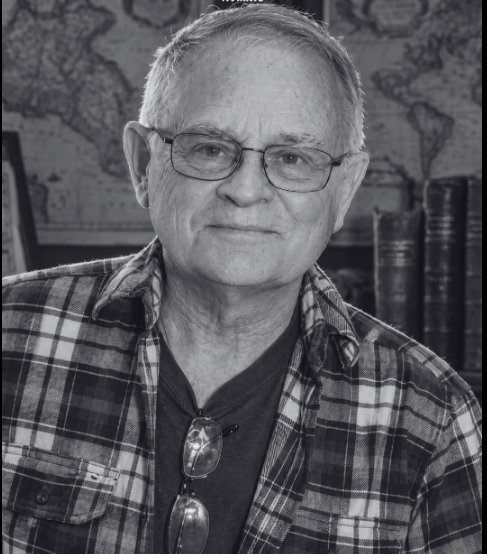
Gary Burghoff was floating in his swimming pool when an airplane passed overhead.
For a moment, he froze.
He tilted his head.
He listened.
There were no helicopters.
But his body had already reacted.
That was when the man America knew as Radar realized something unsettling:
The character had followed him home.
For seven seasons of *M*A*S*H*, Burghoff had played Corporal Walter “Radar” O’Reilly, the young company clerk from Ottumwa, Iowa, who seemed to sense incoming helicopters before anyone else could hear them.
Radar wore glasses.
He carried a teddy bear.
He was innocent, nervous, funny, and deeply compassionate.
And he became one of television’s most beloved characters.
But Gary Burghoff was nothing like Radar.
He was private.
Serious.
A talented drummer.
A gifted wildlife painter.
And a man who had spent his entire life refusing to let one physical difference define him.
Burghoff was born in Bristol, Connecticut, in 1943 with Poland syndrome, a condition that affected the development of his left hand.
Three of his fingers were noticeably smaller.
On television, he often kept that hand out of sight, behind a clipboard, inside a pocket, or beneath a prop.
But he never allowed it to determine what he could do.
Before Hollywood knew his name, Burghoff was already a professional musician.
He played drums in a band called The Relatives, alongside a young Lynda Carter.
He later originated the role of Charlie Brown in the Off-Broadway production of *You’re a Good Man, Charlie Brown*.
Then, in 1970, Robert Altman cast him as Radar in *M*A*S*H*.
When CBS turned the movie into a television series two years later, Burghoff became the only principal actor from the film to reprise his role.
And he transformed Radar.
What might have been a simple comic character became the emotional center of the series.
Radar could make people laugh, but he could also make them care.
Burghoff’s performance earned him an Emmy Award.
He had reached the top.
But there was a price.
The *M*A*S*H* schedule consumed enormous amounts of his life.
He was missing time with his daughter.
His marriage was under strain.
Even ordinary family outings could become difficult because of his fame.
The show was one of television’s biggest successes.
Walking away seemed almost unthinkable.
Mike Farrell reportedly warned him that leaving could hurt his career.
Burghoff understood the risk.
He left anyway.
His departure came during the eighth season in the two-part episode “Good-Bye Radar.”
The emotion audiences saw wasn’t entirely acting.
Letters poured into CBS from viewers who couldn’t imagine *M*A*S*H* without him.
But Burghoff didn’t return permanently.
His career slowed.
A proposed Radar spin-off, *W*A*L*T*E*R*, failed to become a series.
He made a brief return to the character in *AfterMASH*.
Then he gradually stepped away from Hollywood.
And he found something else.
A quieter life.
He painted wildlife.
He continued playing drums.
He worked on inventions, including fishing equipment.
He spent more time away from the spotlight.
To some people, walking away from a hit television series might look like giving up.
For Burghoff, it was something else.
It was choosing.
He had already discovered what fame could give him.
Now he wanted to discover what it was taking away.
So he stepped away from the television show millions of people loved.
He chose family over schedules.
Privacy over attention.
Life over celebrity.
And perhaps that is why the story of Gary Burghoff feels so different from the usual Hollywood success story.
He reached the mountaintop.
Then realized the view wasn’t worth the price.
Radar was famous for hearing helicopters before everyone else.
Gary Burghoff eventually learned to listen for something else:
The sound of his own life calling him back.
And when he heard it, he had the courage to leave.
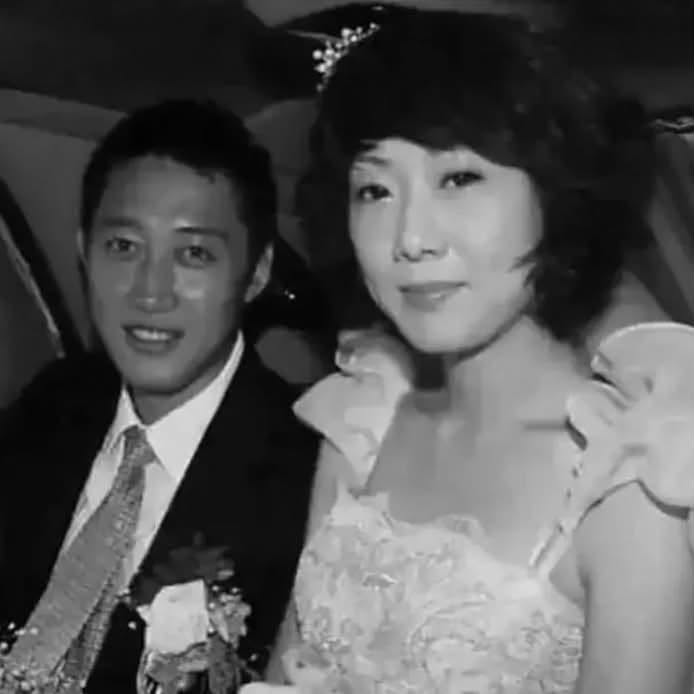
At just twenty-four years old, Wang Xiao received devastating news. Doctors told her she was living with uremia, a life-threatening condition in which the kidneys can no longer filter waste from the blood. Without a successful kidney transplant, they estimated she had only about a year to live.
Her family desperately hoped one of them could become her donor. Every close relative underwent testing, but none proved to be a compatible match. One by one, every conventional option disappeared, leaving Wang with almost no hope.
Rather than surrender to despair, she made a decision that stunned everyone.
In 2013, Wang posted a heartfelt message in an online support group. She wasn’t asking for money or sympathy. She was asking for a miracle.
“I just want to live,” she wrote.
Her request was unlike anything most people had ever seen. She was searching for a terminally ill man who shared her blood type—someone willing to marry her and donate his kidney after death. In return, she promised to care for him with complete devotion for whatever time he had left.
Most readers quietly scrolled past her message.
One man did not.
Twenty-seven-year-old Yu Jianping was battling multiple myeloma, a serious blood cancer. Once a successful manager, Yu had already endured a bone marrow transplant, only to watch the cancer return. His father had sold the family’s home to pay for medical treatment, and his girlfriend had left after learning about his illness. Emotionally exhausted, Yu had begun to lose hope.
Then he saw Wang’s post.
Realizing they shared the same blood type, he sent her a brief but life-changing message:
“I can marry you.”
When they met for the first time in a park, something unexpected happened. Instead of two strangers negotiating a medical arrangement, they found themselves genuinely enjoying each other’s company.
Their friendship quickly deepened.
One day, while chatting online, Wang paused their conversation because she had to begin another dialysis session. Rather than hide her condition, she sent Yu a cheerful video from the dialysis machine. Smiling despite the tubes attached to her arm, she joked, “I’m on dialysis now. My arm is stuck, so today I’m a one-handed monster.”
Yu burst into laughter.
Later, he admitted it was the first genuine laugh he had experienced in a very long time.
On July 16, 2013, they officially registered their marriage.
At first, it was simply a practical agreement. They planned to live separately, keep their finances independent, and avoid telling their families the true reason behind the marriage. If Yu passed away and his kidney proved suitable, Wang would receive the transplant. In return, she promised to care for his elderly father for the rest of his life.
But life had other plans.
Wang began accompanying Yu to his hospital appointments. Yu started preparing warm soup after her exhausting dialysis treatments. They spent long hours together in hospital corridors, encouraging one another and finding reasons to smile even during the hardest days.
Slowly, what had begun as a desperate arrangement became something neither of them expected.
They fell in love.
Not long afterward, Yu faced another devastating setback. Doctors told him he urgently needed a second bone marrow transplant, but the procedure was far beyond what his family could afford.
Wang refused to watch him give up.
She rented a small spot on the street and began selling flowers.
Beside the bouquets, she placed a handwritten note explaining their extraordinary story—two seriously ill strangers who had promised to save each other’s lives.
People stopped to read.
Many purchased flowers.
Others shared the story.
Compassion spread from one stranger to another, and before long Wang had raised nearly 500,000 yuan—enough to cover the entire cost of Yu’s lifesaving transplant.
Then something remarkable happened.
Yu responded well to his second transplant, and his condition gradually stabilized.
At nearly the same time, Wang’s doctors noticed encouraging changes in her own health. Her dialysis treatments became less frequent, and eventually her medical team told her she might no longer need a kidney transplant at all.
The future that had once seemed impossible was suddenly within reach.
In February 2015, Wang and Yu celebrated a true wedding ceremony surrounded by family and friends—not because of a medical agreement, but because they had genuinely fallen in love.
Today, they own a flower shop in Xi’an called Yongsheng Flower, built from the very street stall where Wang once sold bouquets to save her husband’s life. Their extraordinary journey later inspired a major Chinese film released in 2024, allowing millions to discover their incredible story.
Wang Xiao and Yu Jianping proved that hope can appear in the most unexpected places. What began as a marriage born out of desperation became a lifelong partnership built on kindness, sacrifice, and unwavering love.
Sometimes, the greatest miracle isn’t simply surviving an illness.
Sometimes, it’s finding the person who gives you a reason to keep living.
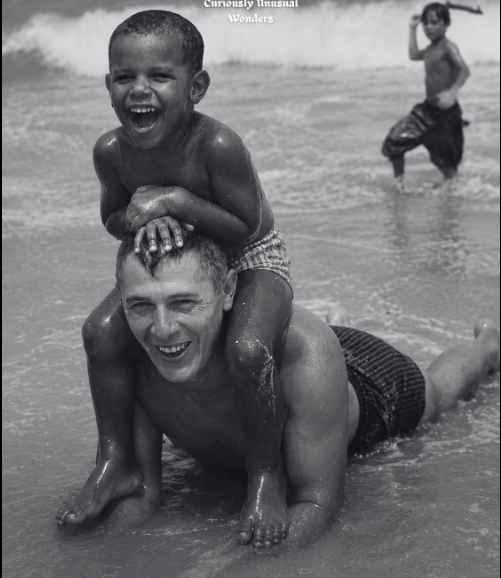
A candid beach photograph captures a young boy laughing with his arms wrapped tightly around his grandfather’s head as waves roll onto the shore behind them. It looks like a simple family moment—one among countless summer memories.
Yet history would remember that little boy as Barack Obama, the 44th President of the United States.
The smiling man carrying him wasn’t a politician, celebrity, or business leader. He was Stanley Dunham, Obama’s grandfather—a World War II veteran, furniture salesman, and the man who quietly helped raise a future president.
The image has become symbolic not because anyone in it knew what the future held, but because it reminds us how ordinary acts of love can leave extraordinary legacies.
Barack Obama’s Early Childhood
Barack Hussein Obama II was born on August 4, 1961, in Honolulu, Hawaii.
His parents, Ann Dunham and Barack Obama Sr., met while attending the University of Hawaii. Their marriage attracted attention during a time when interracial marriages were still uncommon in many parts of the United States.
The marriage, however, was brief.
When Barack was only two years old, his parents separated. His father continued his education, first at Harvard University before eventually returning to Kenya.
His parents officially divorced in 1964.
Like many children growing up in changing family circumstances, young Barack’s life would soon take an unexpected direction.
A New Life in Indonesia
Several years later, Ann Dunham married Indonesian geographer Lolo Soetoro.
The family moved to Jakarta, Indonesia, where Barack spent much of his early childhood.
Living overseas exposed him to a completely different culture.
He attended local schools, learned new customs, experienced economic differences, and witnessed a world far removed from suburban America.
These early experiences would later shape Obama’s global perspective and understanding of different cultures.
Yet another important change awaited him.
Returning to Hawaii
At the age of ten, Barack Obama returned to Honolulu.
Instead of living with his mother full-time, he moved into the home of his maternal grandparents.
For many children, such a move could feel uncertain.
For Obama, it became the foundation upon which much of his character was built.
Stanley and Madelyn Dunham welcomed their grandson into their home while Ann Dunham continued much of her graduate research overseas.
From elementary school through graduation at the prestigious Punahou School, Barack lived with the grandparents he affectionately called “Gramps” and “Toot.”
Those years would become some of the most influential of his life.
Who Was Stanley Dunham?
Stanley Armour Dunham was born in Kansas during the Great Depression.
His childhood was marked by hardship.
When Stanley was just eight years old, his mother died by suicide, leaving an emotional scar that would remain throughout his life.
Rather than allowing tragedy to define him, he developed resilience.
During World War II, Stanley served in Europe with an Army ordnance supply unit under General George S. Patton’s Third Army.
After the war, he built an ordinary working-class life.
He worked in furniture sales—not glamorous work, but honest employment that supported his family.
He wasn’t famous.
He wasn’t wealthy.
He simply kept showing up.
That consistency would later become one of the greatest gifts he offered his grandson.
Madelyn Dunham: The Quiet Force Behind the Family
If Stanley brought warmth and humor, Madelyn Dunham brought stability.
Known to Barack as “Toot,” she became one of the most influential women in his life.
Madelyn worked at the Bank of Hawaii and steadily climbed the corporate ladder.
In 1970, she became one of the bank’s first female vice presidents—a remarkable achievement during a period when women rarely occupied senior executive positions.
Obama frequently described her as disciplined, dependable, and quietly determined.
She balanced Stanley’s outgoing personality with calm practicality.
Together, they created a loving and structured home.
Growing Up Under Their Roof
Barack Obama often described his grandparents as giving him something invaluable: normalcy.
They ensured he attended excellent schools.
They encouraged education.
They emphasized responsibility and respect.
Most importantly, they were present.
Many of life’s defining moments happened not during grand celebrations but during ordinary days.
One memory Obama has shared repeatedly involves sitting on his grandfather’s shoulders while watching astronauts arrive at Hickam Air Force Base after returning from space missions.
It wasn’t a historic political event.
It wasn’t a lesson from a classroom.
It was simply a grandfather making time for his grandson.
Those simple experiences often become the memories children carry for a lifetime.
Lessons Beyond the Classroom
Stanley and Madelyn taught Barack lessons that extended far beyond academics.
They modeled perseverance through everyday actions.
Stanley demonstrated optimism despite personal hardships.
Madelyn showed that discipline and hard work could open doors, even in workplaces where opportunities for women remained limited.
Together, they illustrated that success rarely comes from dramatic moments.
Instead, it grows from thousands of consistent choices made over many years.
These lessons became evident throughout Obama’s political career.
His speeches frequently reflected themes of resilience, responsibility, hope, and community—values many biographers trace back to his upbringing.
The Road to Public Service
After graduating from Punahou School, Obama attended Occidental College before transferring to Columbia University.
He later graduated from Harvard Law School, where he became the first Black president of the Harvard Law Review.
His career included community organizing in Chicago, practicing law, teaching constitutional law, serving in the Illinois State Senate, and later representing Illinois in the U.S. Senate.
Each achievement built toward an extraordinary milestone.
In 2008, Barack Obama was elected the 44th President of the United States.
Millions celebrated across America and around the world.
Sadly, the two people who had helped raise him were unable to experience that victory together.
Stanley Dunham Never Saw His Grandson Become President
Stanley Dunham passed away on February 8, 1992.
He never witnessed Barack Obama’s rise through public office.
He never saw the campaign rallies.
He never heard the inaugural address.
He never stood in the crowd during history.
But his influence remained deeply embedded in the man his grandson became.
Madelyn Dunham Came Heartbreakingly Close
Madelyn Dunham lived long enough to watch Obama’s historic presidential campaign.
However, she died on November 2, 2008, after battling cancer.
Election Day came just two days later.
She missed seeing her grandson officially elected President by only 48 hours.
Obama often spoke emotionally about her sacrifice and support.
During his campaign, he referred to her as one of the people who had made his journey possible.
Why Their Story Still Matters Today
The story of Stanley and Madelyn Dunham resonates because it isn’t simply about politics.
It’s about family.
It’s about grandparents stepping in when life changes unexpectedly.
It’s about ordinary people performing extraordinary acts without expecting recognition.
Across the world, millions of grandparents help raise grandchildren.
Some provide temporary care.
Others become primary caregivers.
Their contributions often go unnoticed.
The Dunhams remind us that the greatest influence on a child’s future frequently happens far from television cameras and headlines.
The Legacy of Love and Consistency
Looking back at that beach photograph, it’s tempting to see destiny.
But history rarely works that way.
No one in the picture knew that the laughing little boy would one day become President of the United States.
What the photograph truly captures is something more universal.
A grandfather carrying his grandson.
A family making the best of changing circumstances.
Years of patience, guidance, encouragement, and unconditional love.
Stanley and Madelyn Dunham never set out to raise a future president.
They simply chose to be there.
Sometimes, that is the greatest legacy anyone can leave.


The Grandparents Who Raised Barack Obama: The Untold Story Behind a Future President

Vivian Liberto: The Untold Story of Johnny Cash’s First Wife and the Love That Began With Letters

Ruth Coker Burks: The Woman Who Cared for Hundreds of AIDS Patients When Few Others Would
Gary Burghoff was floating in his swimming pool when an airplane passed overhead. For a moment, he froze. He tilted...
At just twenty-four years old, Wang Xiao received devastating news. Doctors told her she was living with uremia, a life-threatening...
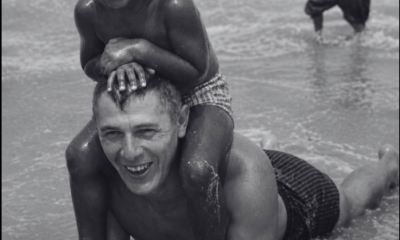
The Grandparents Who Raised Barack Obama: The Untold Story Behind a Future President
A candid beach photograph captures a young boy laughing with his arms wrapped tightly around his grandfather’s head as waves...
Vivian Liberto: The Untold Story of Johnny Cash’s First Wife and the Love That Began With Letters
Long before Johnny Cash became one of country music’s greatest legends, he was a 19-year-old Air Force recruit who met...
Ruth Coker Burks: The Woman Who Cared for Hundreds of AIDS Patients When Few Others Would
In the early years of the AIDS epidemic, fear and misinformation often left patients isolated from their families, communities, and...

The Incredible Story of Two Dublin Boys Who Accidentally Flew to New York in 1985
In the summer of 1985, what began as an ordinary afternoon for two boys from Dublin, Ireland, turned into one...

Erin Pizzey: The Woman Who Opened Britain’s First Refuge for Women Escaping Domestic Abuse
In the autumn of 1971, a small, neglected building in Chiswick, West London, became the starting point of a movement...

James Garner’s Inspiring Life: How Childhood Abuse Shaped One of Hollywood’s Most Beloved Stars
Before James Garner became one of Hollywood’s most respected actors, he survived a childhood marked by loss, hardship, and abuse....

David Janssen and The Fugitive: The TV Icon Who Kept Millions on the Edge of Their Seats
When David Janssen died of a heart attack on 13 February 1980, he was only 48 years old. Although he...

Taylor Swift and Travis Kelce’s Wedding Philanthropy: How Their Celebration Inspired Giving
When most celebrity weddings make headlines, the focus is often on designer outfits, famous guests, and lavish venues. But if...

 Things To Do2 years ago
Angel Fire or Red River: Which New Mexico Mountain Town is Right for You?
- Beaches2 years ago
Is Driving Allowed on Panama City Beach?
- Beaches2 years ago
Does Allegiant Air offer flights to Daytona Beach?
- Things To Do3 years ago
Claridge’s vs The Savoy: Which Hotel Reigns Supreme?
- Things To Do2 years ago
Is it Permitted to Bring Food into Costa Rica?
- Things To Do2 years ago
What are the best activities for a fun Monday night in NYC?
- RV CAMPING2 years ago
When a woman wakes up, a random dog is in her bed
- Travel FAQs2 years ago
What are the dimensions of an average hotel room?